

Admin guide · Organization
EU AI Act
Three things live under Admin → EU AI Act: a classifier that labels your Prompt Vault prompts by risk level, the per-key enforcement that compares live traffic against what a key declared, and an evidence pack you can hand to an authority.
The risk classifier
Turn it on and pick the model that powers it. A dedicated API key is provisioned on the internal System project and stored encrypted.
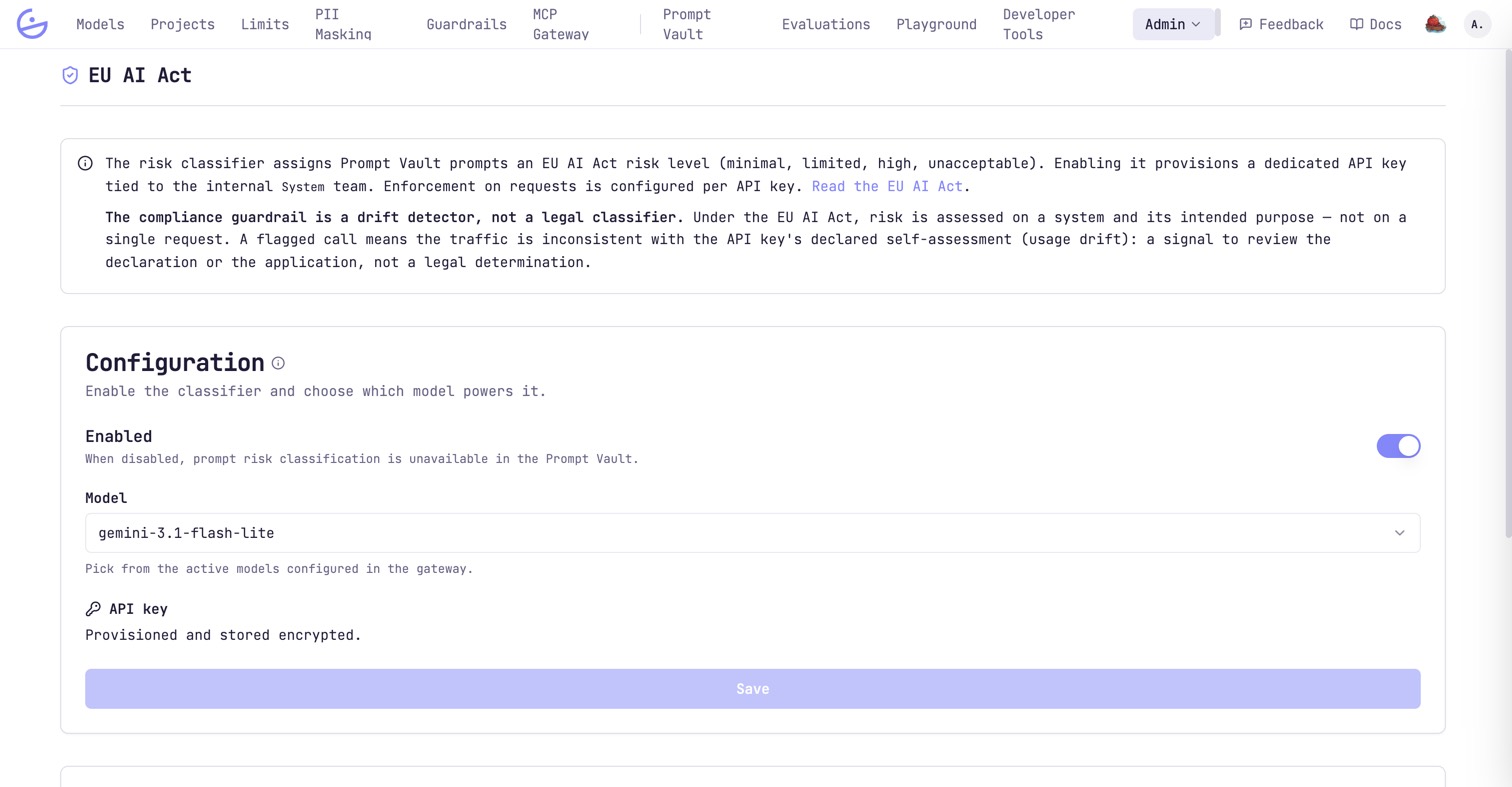
With it on, every prompt in the Prompt Vault carries a risk level — minimal, limited, high or unacceptable — shown in the editor next to the prompt content, with a Mitigate risk action that proposes a safer rewrite. With it off, classification simply disappears from the Vault; nothing else changes.
Enforcement is per API key
The page configures the classifier. Whether a request is actually blocked is decided on the key that made it.
Each API key carries an EU AI Act policy block: a self-assessed risk level for the application behind that key, and whether traffic that contradicts it is blocked or merely flagged. A key with no declaration is not judged at all — its calls are counted as skipped.
warning · A drift detector, not a legal classifier
Watching the drift
The Compliance tab of Monitoring is the reporting side of this page.
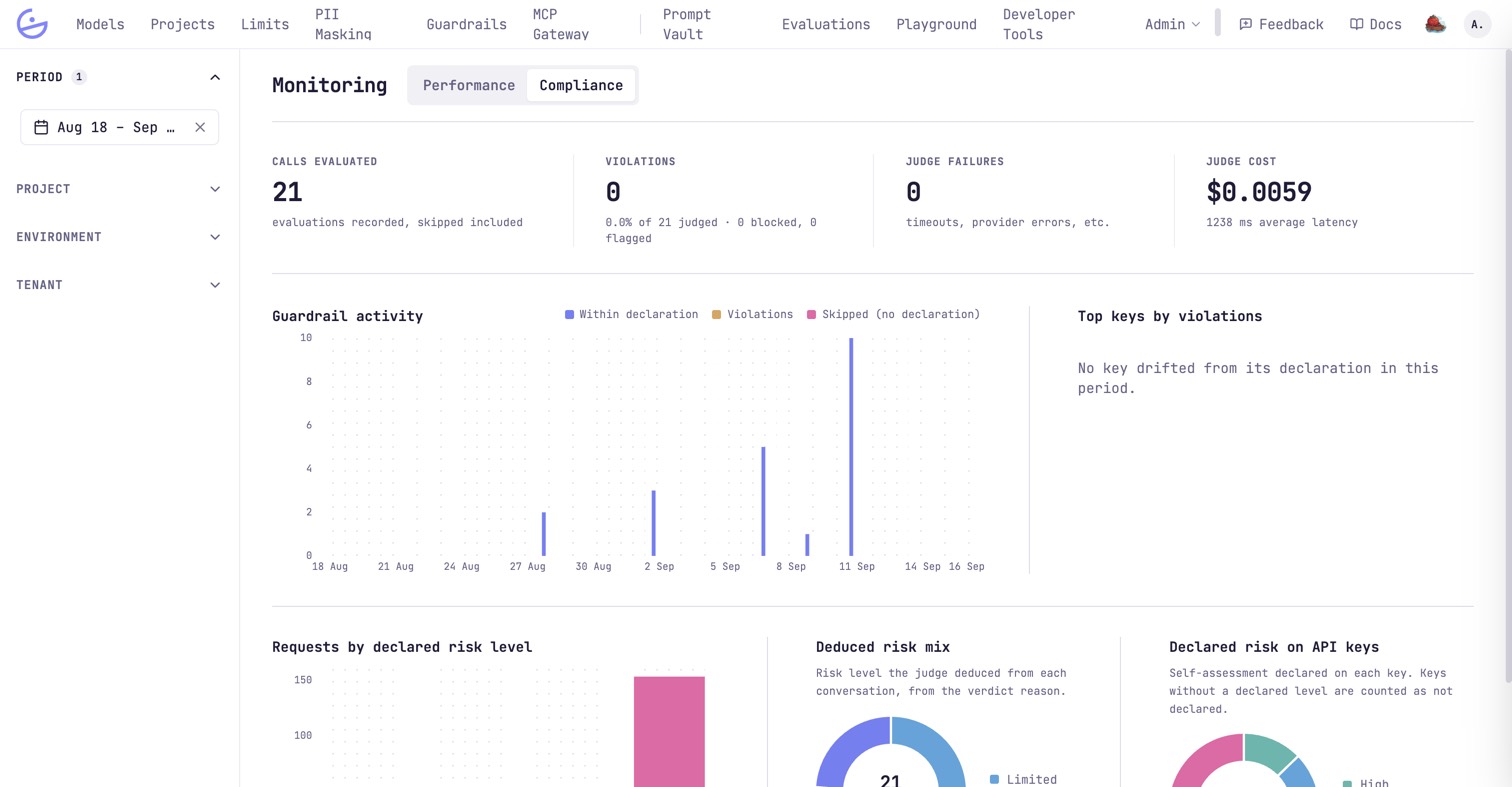
| Field | Type | Description |
|---|---|---|
| Calls evaluated | counter | Evaluations recorded in the period, including calls skipped for want of a declaration. |
| Violations | counter | Calls whose deduced risk contradicted the declaration, split into blocked and flagged. |
| Judge failures | counter | Timeouts and provider errors on the judge itself — these are not verdicts, and a rising count means the signal is going blind. |
| Judge cost | spend | What the classification itself cost, with its average latency. It is real gateway traffic and shows up in your spend. |
Deduced risk mix is what the judge inferred from the conversations; Declared risk on API keys is what you told it to expect. Comparing the two is the point of the page — a large skipped share means the keys are not declaring anything yet, not that you are compliant.
Evidence pack
A period's compliance evidence as one ZIP: traces, audit logs, guardrail events, roles and AI Act declarations, with a PDF summary.
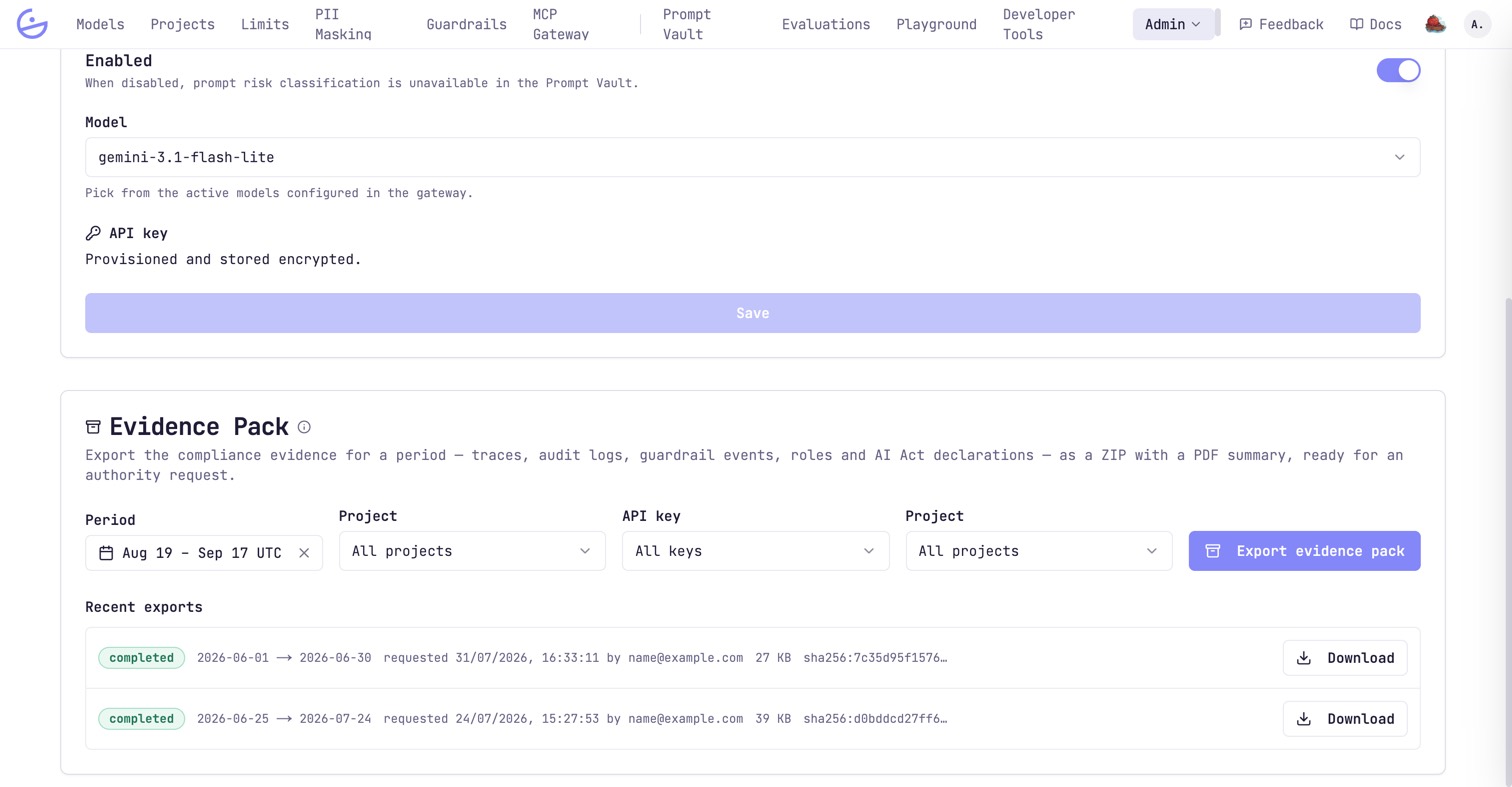
Scope it by period and, optionally, a single project or key. Past exports stay listed with who requested them, their size and a SHA-256 digest — so an export you hand over can be shown later to be the same bytes.
tip · Export before retention catches up